
Bearing Part Numbers Explained: Identifying Size, Series and Seals for Accurate Ordering
March 20, 2026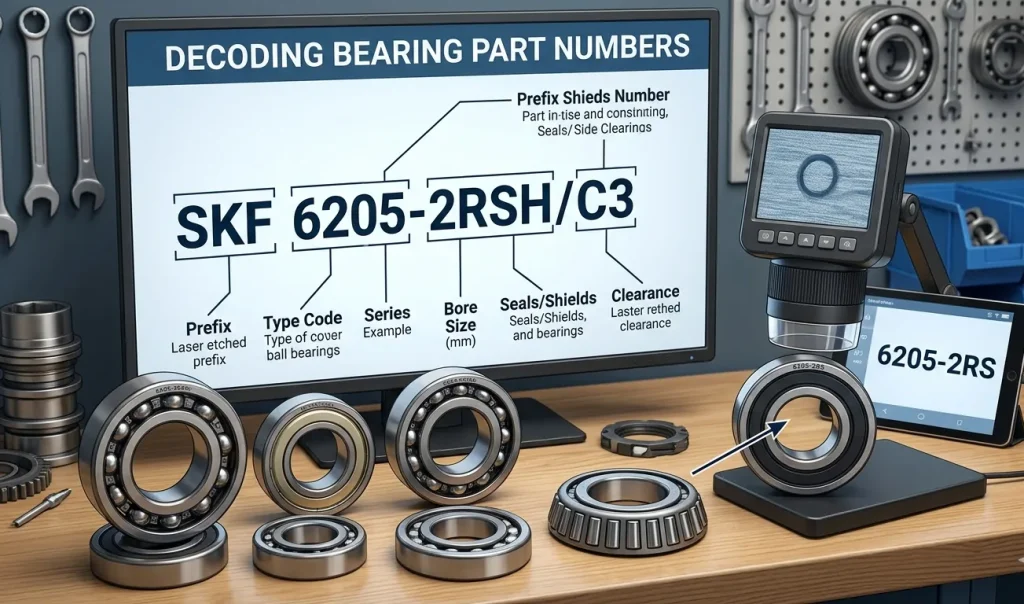
Reduce ordering errors using bearing part numbers with guidance from Global Bearings, trusted industrial bearing suppliers for industries in Australia.
Accurate bearing identification supports equipment reliability across industrial, agricultural, and mechanical systems. Bearing part numbers provide a standardised method for defining size, series, and sealing configuration. Clear interpretation reduces ordering errors and helps ensure compatibility across applications.
How Bearing Part Numbers Are Structured
Manufacturers follow internationally recognised numbering conventions to communicate bearing specifications efficiently. Bearing part numbers typically combine a series reference, bore size code, and suffixes that describe seals, shields, or internal clearance. This structure allows buyers to compare equivalent products across different brands with confidence.
Consistent numbering also supports maintenance planning and inventory control. Correct interpretation helps confirm shaft fitment, load suitability, and environmental protection before installation. This approach reduces downtime caused by incorrect bearing selection.
Bearing Series, Bore Size and Common Suffixes
Bearing identification becomes clearer when each component of the part number is assessed individually. Each segment communicates functional, dimensional, or environmental suitability information that supports accurate bearing selection.
A breakdown of the most common elements used in bearing identification includes:
- Bearing Series: Defines the bearing’s load capacity, cross-section, and overall robustness, helping determine suitability for light-duty or heavy industrial applications.
- Bore Size Code: Indicates the internal diameter using standardised numerical increments, ensuring correct shaft compatibility during installation.
- Seal Type: Specifies whether the bearing uses rubber seals or metal shields, which directly affects contamination protection and lubrication retention.
- Internal Clearance: Identifies the designed space between rolling elements and raceways, allowing for thermal expansion and operating load conditions.
- Design or Material Variant: Highlights application-specific features such as corrosion-resistant steel or enhanced internal geometry for specialised environments.
Avoiding Errors When Interpreting Bearing Part Numbers
Misinterpretation often occurs when suffixes or clearance indicators are overlooked. Bearing part numbers must be reviewed as a complete designation rather than as individual characters. Seal type and clearance ratings can significantly affect bearing performance in dusty, wet, or high-temperature environments.
Accurate identification also supports reliable brand interchangeability when equipment specifications permit. Applying recognised numbering standards helps ensure replacement bearings meet dimensional and operational requirements. This level of accuracy protects machinery and extends service life.
For further technical reference on standardised bearing designation systems, explore NSK’s Bearing Designation Systems technical document.
Precision Bearing Selection Support
Correct interpretation of bearing part numbers improves procurement accuracy and long-term equipment performance.
At Global Bearings, we supply a wide range of industrial bearings supported by technical product knowledge and practical application experience. Our reliable sourcing ensures compatibility across manufacturing, transport, mining, and agricultural sectors. We offer professional guidance when selecting bearings based on operating loads, sealing requirements, and environmental conditions.
Contact us to ensure your bearing selection is accurate, compliant, and suited to your application.
Related Blog Articles:
SKF 311 Deep Groove Ball Bearing – Optimised for High Load, Moderate Speed Machinery
Bearing Importers Australia: Why Global Bearing Imports is Your Best Choice
Optimized by: Netwizard SEO