
Master the essentials of automotive bearings with our comprehensive guide. Gain a deep understanding of. Contact Global Bearings for expert supply advice.
If you're a car owner, chances are you've heard about automotive bearings. They play a crucial role in your vehicle's smooth and efficient operation. However, many car owners don't know much about automotive bearings or how they work. That's why we've compiled this comprehensive guide to help you understand everything you need about automotive bearings.
What are Automotive Bearings?
Before we dive into the details, let's define what automotive bearings are. Automotive bearings allow two vehicle parts to move relative to each other with minimal friction. They are found in various vehicle parts, such as the engine, transmission, wheels, and suspension system. They are typically used in engines, wheels, transmissions, and other vital components. Bearings come in various shapes and sizes, each serving a specific purpose. For example, ball bearings are used in wheel hubs, while roller bearings are commonly used in transmissions.
How Automotive Bearings Work
To understand how automotive bearings work, you need to know about friction. Friction is the force that opposes motion between two surfaces in contact. When two surfaces rub against each other, the friction causes heat and wears them down over time. Automotive bearings are designed to minimise friction between two surfaces in contact with each other, allowing them to move smoothly.
Automotive bearings work by reducing friction between two moving surfaces. They separate the two surfaces by using rolling elements, such as balls or rollers. The rolling elements roll between the two surfaces, minimising the contact area and reducing friction. This helps improve the efficiency and lifespan of the components.
Types of Automotive Bearings
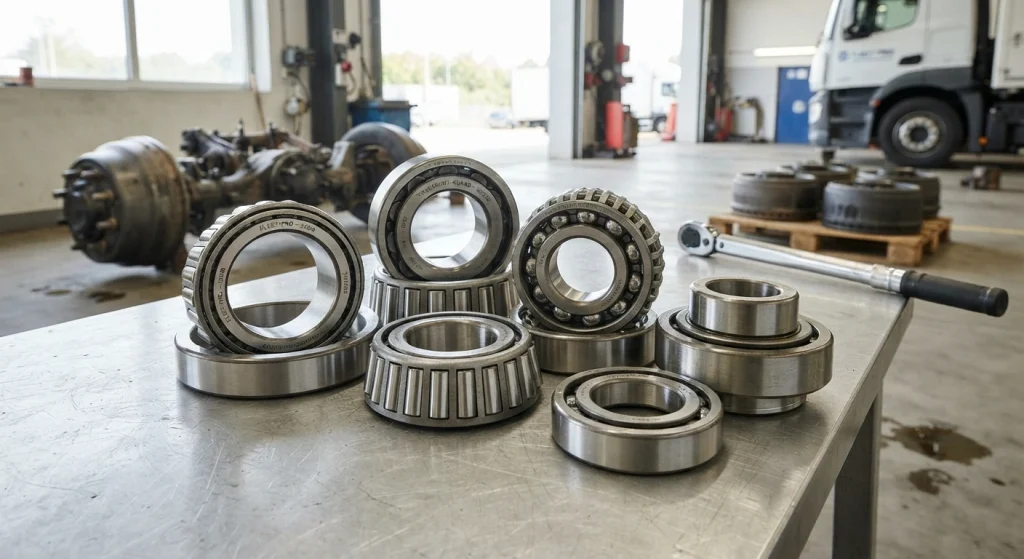
There are several types of automotive bearings, the most common being ball bearings, roller bearings, tapered roller bearings, and needle bearings. Each type of bearing has unique properties and applications. For instance, ball bearings are used in applications that require low friction, while roller bearings are used for heavy-duty applications.
Ball Bearings
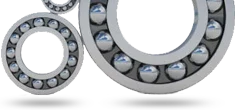
Ball bearings are the most common type of bearing used in vehicles. They consist of steel balls placed between two rings or races. The balls rotate and roll between the two races, reducing friction and allowing the parts to move smoothly.
Roller Bearings
Roller bearings are similar to ball bearings but have cylindrical rollers instead of balls. They can handle heavier loads than ball bearings and are commonly used in wheel bearings and transmission systems.
Tapered Roller Bearings
Tapered roller bearings are designed to handle both radial and axial loads. They have a cone-shaped roller and race that allows them to support both loads.
Needle Bearings
Needle bearings are similar to roller bearings but have thinner rollers. They are used in applications where space is limited, such as transmission.
Thrust Bearings
Thrust bearings are designed to handle axial loads, such as the force the wheels generate when braking. They consist of two races and a set of rollers or balls.
How to Identify a Faulty Bearing?
A faulty bearing can cause various issues in your vehicle, such as noise, vibration, and uneven wear on the tires. Here are some signs of a faulty bearing:
Grinding Noise
If you hear a grinding noise coming from your wheels or transmission, it could be a sign of a faulty bearing. The noise is usually a result of metal rubbing against metal due to worn-out bearings.
Vibration
A faulty bearing can cause vibration in the vehicle, especially at higher speeds. The vibration may feel like a slight wobble or shaking and may be more noticeable in the steering wheel or seat.
Uneven Wear on Tires
If your tires wear out unevenly, it could be due to a faulty bearing. A worn-out bearing can cause the wheel to tilt or wobble, resulting in uneven tire wear.
In conclusion, automotive bearings are crucial components in an automobile that help reduce friction and improve the efficiency and lifespan of various components. Understanding the different types of bearings and their applications can help you choose the right bearing for a specific application.


